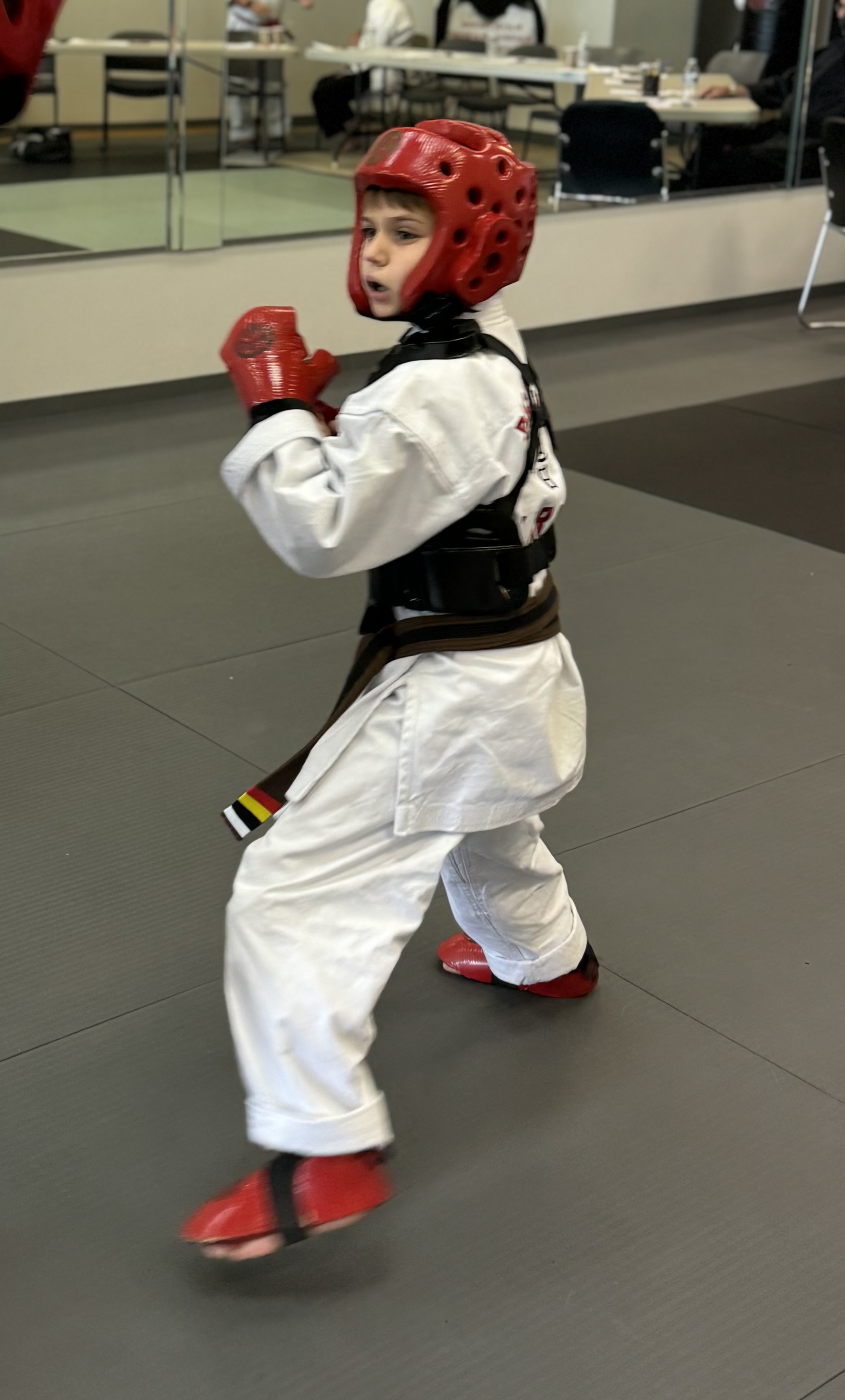
| |
|
|
The
Benefits Of Martial Arts Training
For
Children With ADD/ADHD.
Can
Children Diagnosed With ADD/ADHD
Benefit From The Martial Arts.
Date : Friday,
February 04, 2005
Windsor, Ontario
Canada -- (ArriveNet - Feb 04, 2005) -- Martial Arts Help Children
With ADD And ADHD
WIndsor Ontario -- Attention Deficit Disorder (ADD) affects up to 5
percent of all North American children ages 5-18, according to
Sports Illustrated For Kids writer Rose Kennedy. Furthermore,
estimates range from one to four million youngsters take Ritalin,
the drug of choice in treating ADD and Attention
Deficit/Hyperactivity Disorder (ADHD).
One conclusion drawn from numerous studies is that children
diagnosed with ADD or ADHD are more successful in structured
activities.
ABC News correspondent Karen Chase writes, "It's so simple it's hard
to believe, but the latest technique for combating the symptoms of
ADD is martial arts." Parents see increased self-esteem and improved
focus and concentration abilities in their children.
"Using mind-body disciplines, martial arts seem to address the short
attention spans of today's children, even those diagnosed with
ADHD," says a recent report by HealthAtoZ.com. Boys diagnosed with
ADHD outnumber girls three to one.
Many martial arts schools are teaching the principles advocated by
Mr. Miyagi in the "Karate Kid" movies and moving away from the beat-em-up
tactics portrayed in most other fictional karate and kung fu films.
In an interview for Children Today, martial arts expert and author
Joyce Roberson explains that "contrary to the visual perception of
karate being a violent sport, the premiere dictate of this sport is
nonviolence above all else."
Karate Kids:
Children and Martial Arts
By Carma Haley

Jackie Chan,
Bruce Lee, Chuck Norris and Stephen Segal all do it. The "Teenage
Mutant Ninja Turtles" did it, too. And don't forget that you can see
it every weekday on the "Power Ranger" episodes as well.
Demonstrations of martial arts in movies and on television add an
element of excitement and action. This action is often imitated by
young children on playgrounds, schoolyards or at home with siblings.
If a child shows an interest in "the moves," should a parent
consider enrolling them in a martial arts program? What benefits
would martial arts training provide? Is it worth it?
"Martial arts,
especially those styles that originated in Japan and Okinawa, are
based on the premise of respect and 'do no harm,'" says Joyce
Roberson, a martial arts expert and author of the "Karate for Kids"
column. "Contrary to the visual perception of karate being a violent
sport, the premiere dictate of this sport is nonviolence above all
else."
Martial arts in
the movies may not offer a true indication of what the "sport"
teaches children and adults as well. Allowing your child to receive
martial arts training is not opening up a door to violence, it is
opening a door to building a solid foundation of self-esteem and
confidence. "Students learn that respect for others, as a priority,
naturally leads to a respect for self," says Roberson. "This
wonderful philosophy is often at odds to what our young people learn
here in the United States. We have become obsessed with the 'me
first' mentality which often leads to emotionally unhealthy young
people."
There are
various forms, types and styles of martial arts instruction
available. In choosing a program for children, a parent may need to
research the varying styles and decide which is best suited for
their child's interests, level of development and motivation.
"Our son is 8
years old. He started karate at age 7 and now has his green belt,"
says Anne Trudelle, an occupational nurse from Port Perry, Ontario,
Canada. "The reason we put our son in karate was threefold: to
increase his self-confidence and thereby his focus on scholastic
skills, increase his social awareness in that if ever confronted, he
was in receipt of the knowledge of how to protect himself and others
from danger."
In addition to
building confidence and self-esteem, classes in martial arts offers
other benefits as well. According to Roberson, children with
learning difficulty, such as ADHD, hyperactivity or behavior
problems, can benefit from the structure learning program that
martial arts training offers. Parents of ADHD children tend to
agree. "Our son, David, participated in martial arts from ages 9 to
11," says Karen Jenista, a housewife from Colorado Springs, Colo.
"His psychologist recommended a form of martial arts to instill
self-discipline and self-esteem in David, issues that were present
due to his ADHD. David progressed to the green-belt level.
Participating in martial arts did give David confidence -- in
himself and his abilities. I think it really helped him to have
visible proof of his ability -- the different colored belts and the
awards of his achievements."
There is a
shared concern from some parents about the dangers and negative
effects of martial arts training for young children. The fear of
injury, using the techniques during play or the possibility of their
child causing injury to others has prevented some parents from
enrolling their child in a martial arts program. "My son has shown
an interest for some time but I haven't given in," says Karyn Lickey,
a nurse's assistant from Richmond, Va. "I have a fear of him
beginning to believe he is invincible and kicking or hitting another
child. He pretends with karate moves now, what will happen if he is
taught how to do the real moves?" According to Roberson, if a child
is given proper instruction followed by reinforcement by parents,
the risk of being injured or causing injury to another person does
not outweigh the benefits. A parent can learn what their child
learns by watching the classes or perhaps, taking a class
themselves.
Karate teaches
self-discipline, builds self-esteem and a level of commitment, which
may otherwise not be there. Maybe those turtles are on to something.
"Karate, more than any other sport, is a life-long process," says
Roberson. "When kids click with this sport, it will follow them into
adulthood. It can become a way of life, as these kids continually
challenge themselves."
 |
|